In-feed units
Cards in article lists, social-style feeds and app timelines.
Vectravia buys native placements in articles and feeds, assembles each ad from your headline, image and text, and matches it to the look of the page.
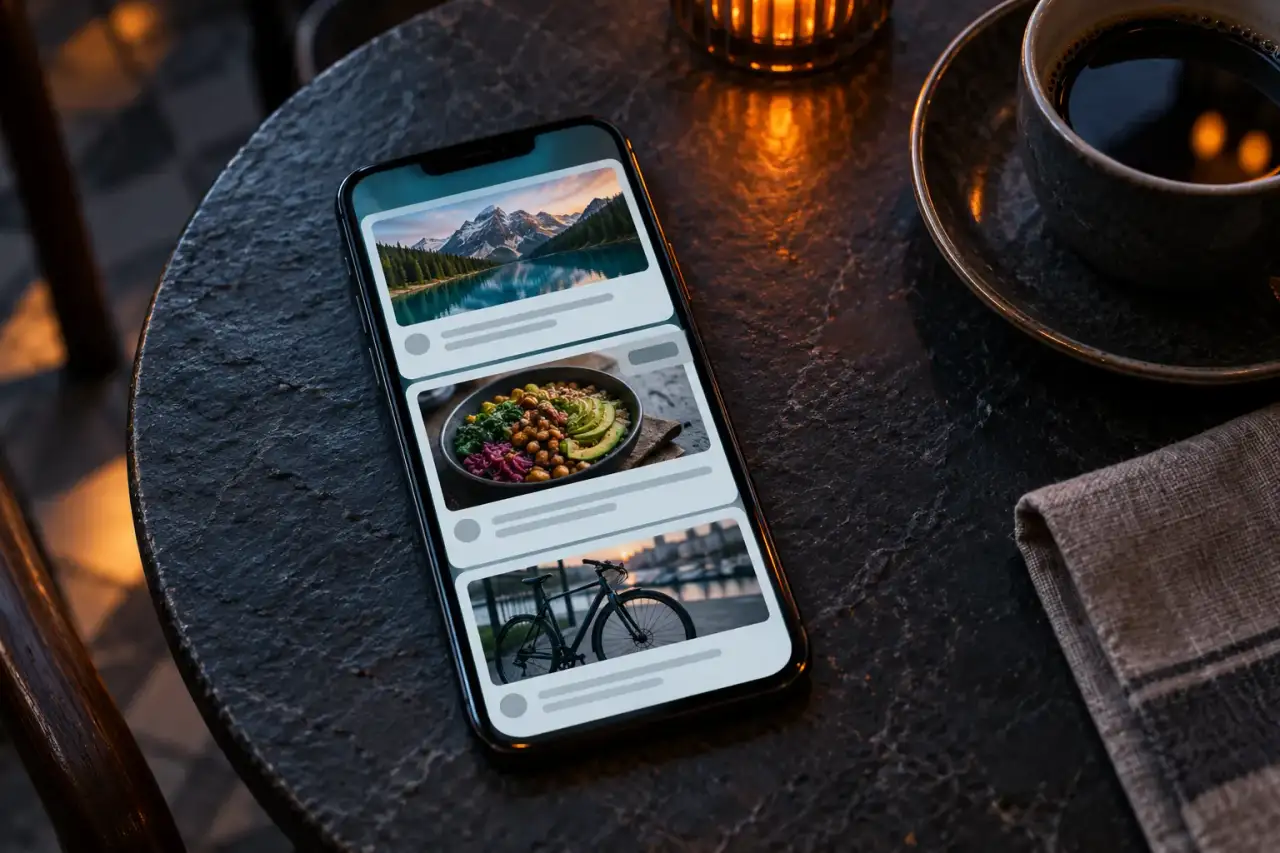
Native advertising places ads that take on the form of the content around them: a card in a feed, a recommendation under an article, a listing in an app. The publisher renders the ad in its own style from assets the buyer supplies.
In a bid request, a native placement is described by the OpenRTB Native object, which lists the assets the publisher needs: a title of a certain length, an image of a certain size, a short description and a call to action.
The Native object says which assets the placement needs and their size limits.
Your headline, images, description and call to action are matched to those limits.
Context Engine and suitability tiers decide whether the surrounding content fits your brand.
The publisher renders the ad with its sponsored label, in its own style.
Cards in article lists, social-style feeds and app timelines.
Sponsored links in recommendation widgets under articles.
Native placements that match an app interface.
Native and display share the open web, and the same supply-quality findings apply.
44,000
websites: how many an average campaign in the 2023 ANA study ran across
Source: ANA, Programmatic Media Supply Chain Transparency Study,
15%
of spend in that study went to made-for-advertising sites
Source: ANA, Programmatic Media Supply Chain Transparency Study,
1.1%
MFA exposure reported for Q1 2026 in the ANA benchmark
Native ads are measured on viewability and engagement, such as clicks and time on the landing page. Signal Reports shows which numbers are counted and which are modeled.
Because native ads look like content, placement quality matters. Every native placement in your reports carries its domain or app and its seller relationship.
| Standard | What it does here |
|---|---|
| OpenRTB 2.6 IAB Tech Lab | The Native object carries the asset request and response for each placement. |
| OpenRTB Dynamic Native Ads API IAB Tech Lab | Defines the native asset request and response: titles, images, data fields and video. |
| Made for Advertising definition ANA, 4As, WFA and ISBA | Industry definition used to keep native ads off made-for-advertising pages. |
Each product has its own page with the capabilities, standards and questions behind it.
Contextual targeting and brand suitability, no user ID needed.
Supply-path checks against ads.txt and sellers.json before every bid.
Identity and consent signals handled before data is used.
In-stream and out-stream video
Banner inventory with quality controls
Mobile apps with app-ads.txt checks
No. You supply assets once (headlines, images, descriptions and a call to action) and each publisher renders them in its own style, within the limits set in the Native object.
Yes. Publishers render native ads with their own sponsored or ad label. Vectravia does not buy placements that hide the label.
Path Check verifies the seller and can apply made-for-advertising exclusion lists, and Context Engine applies your suitability tier before a bid.
See how native sits beside your other channels in one budget, with the supply path shown for every placement.