Roadside and street
Digital billboards and street furniture screens.
Vectravia buys screens in streets, stations and venues through the OpenRTB DOOH object, and prices each play with the Qty multiplier the seller provides.
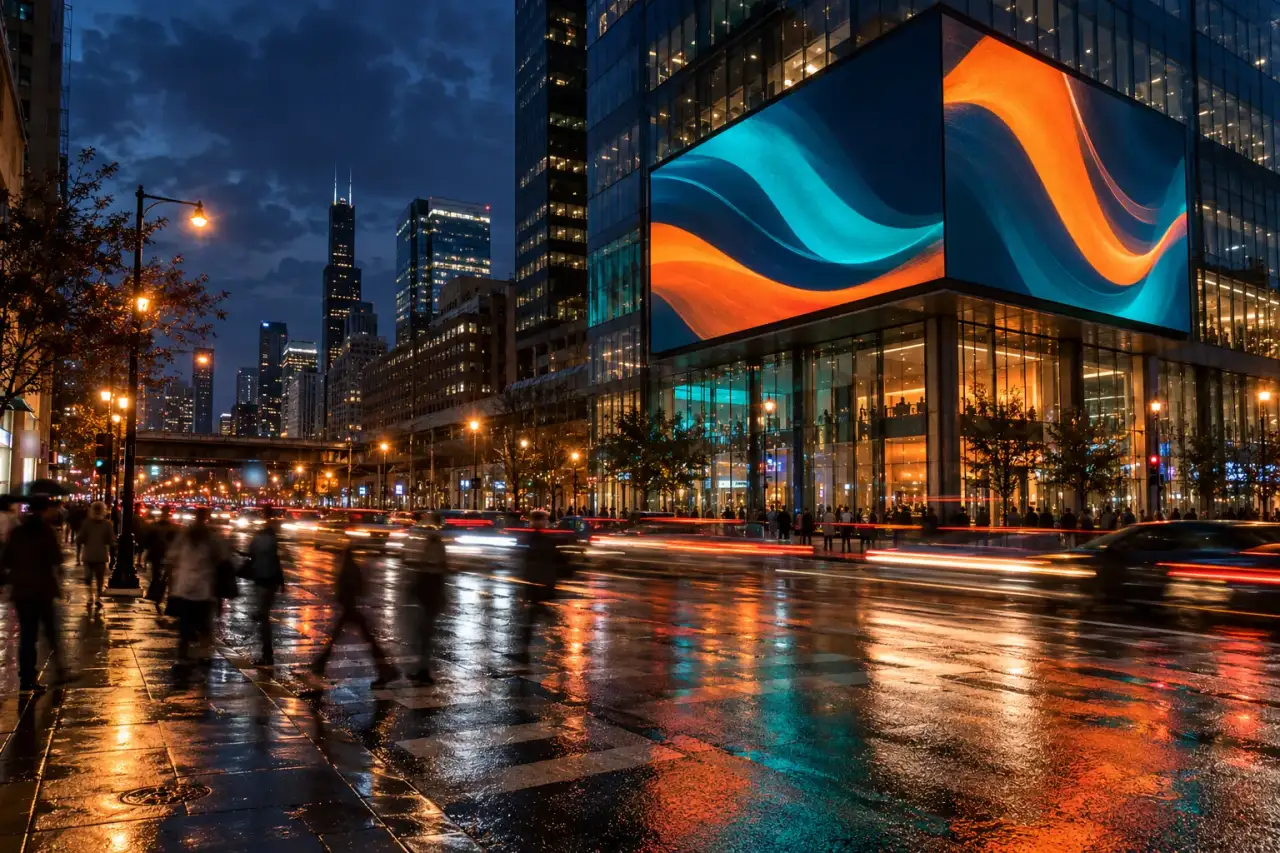
Digital out-of-home (DOOH) advertising runs ads on screens in public places: roadside billboards, transit stations, malls, airports and venues. One play of an ad is seen by everyone in front of the screen at that moment.
That is why DOOH counts differently from a phone or laptop. OpenRTB 2.6 added a DOOH object for these screens and a Qty object whose multiplier says how many impressions one play is worth.
The DOOH object describes the venue and screen; it never comes with a site or app object.
The Qty multiplier says how many billable impressions one play counts as.
Omni Buy prices the bid against the multiplied impressions, not a single view.
Signal Reports shows plays and multiplied impressions side by side.
Digital billboards and street furniture screens.
Screens in stations, platforms and airports.
Screens in malls, stores, gyms and other venues.
The OpenRTB DOOH additions are recent, and the multiplier is the key field.
14.2
impressions: the spec example for how many one DOOH play may count as
Nov 2022
when OpenRTB 2.6-202211 added the DOOH and Qty objects
DOOH is reported in plays and in impressions. A play is counted when the ad runs on the screen; impressions are the play multiplied by the Qty value the seller sent.
Signal Reports keeps both numbers and labels the multiplied figure, so you can see how much of the total rests on the seller audience estimate.
| Standard | What it does here |
|---|---|
| OpenRTB DOOH object IAB Tech Lab | Describes digital out-of-home screens and venues in the bid request. |
| Qty object IAB Tech Lab | Carries the multiplier: the number of billable events one purchase represents. |
| sellers.json IAB Tech Lab | Identifies the screen owner or intermediary selling each play. |
Each product has its own page with the capabilities, standards and questions behind it.
One budget, pacing and frequency view across seven channels.
Measured and modeled numbers, labeled apart.
Supply-path checks against ads.txt and sellers.json before every bid.
Ad pods and SSAI-aware bidding
Banner inventory with quality controls
Streaming audio and podcasts
It is a field in the OpenRTB Qty object that says how many billable impressions one purchase counts as. For a screen seen by a crowd, one play may count as many impressions.
No. In OpenRTB 2.6 a bid request with a DOOH object must not also contain a site or app object.
Signal Reports shows DOOH plays and multiplied impressions separately, and labels the multiplied figure, so it can be compared with other channels without hiding how it was counted.
See how digital out-of-home sits beside your other channels in one budget, with the supply path shown for every placement.